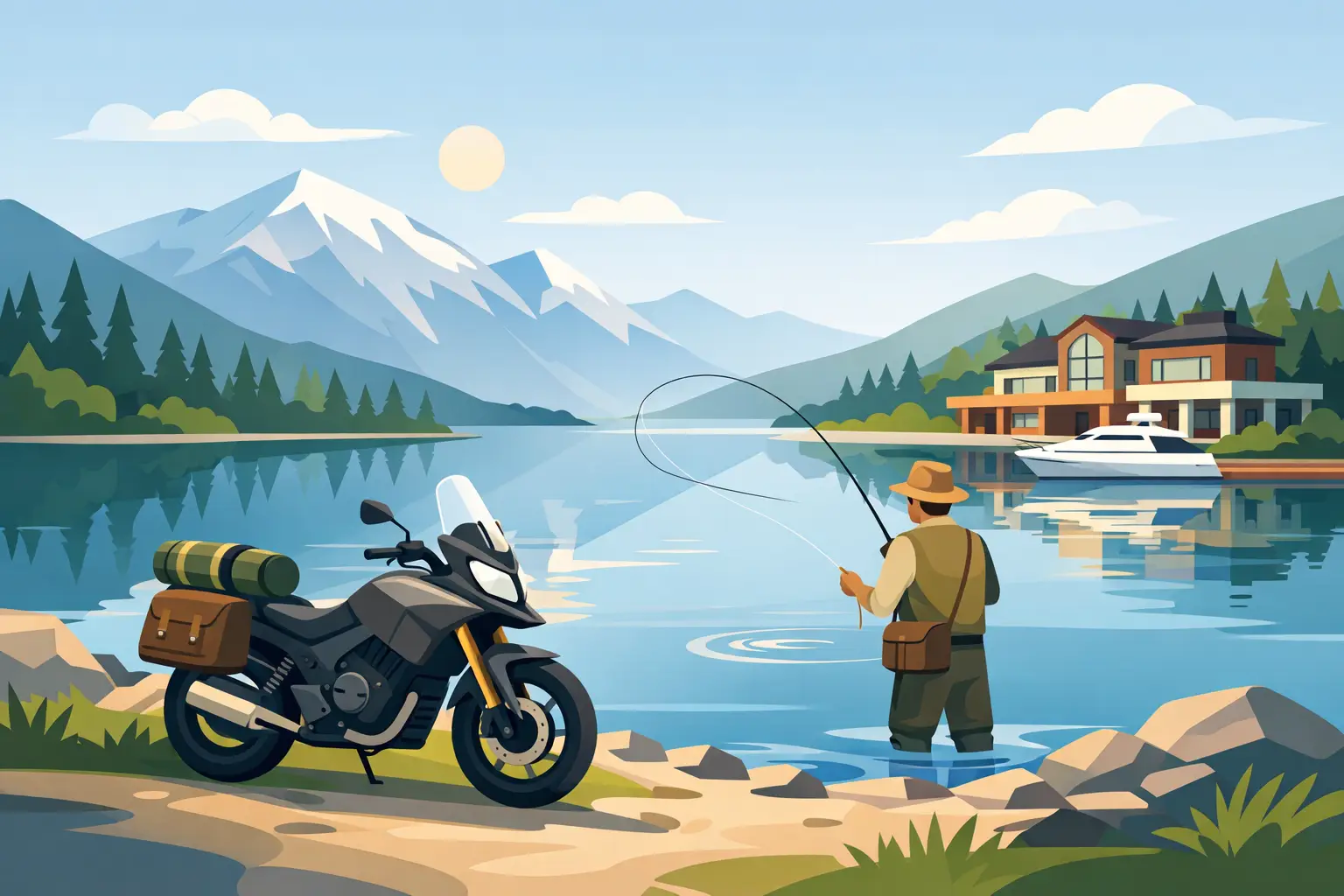
A cold river running beneath a mountain pass changes the rhythm of a motorcycle journey. One moment, you are leaning through a sweep of open road with the landscape unfolding ahead. The next, your helmet is off, your waders are on, and the only sound is current moving over stone. Motorcycle fly fishing is not about fitting more into a vacation. Done well, it is about pairing two deeply immersive pursuits without sacrificing the comfort, pace, or privacy that makes a great escape feel restorative.
For travelers who love both the road and the water, the appeal is obvious. The execution, however, deserves more care than simply strapping a rod tube to a motorcycle and hoping the best access point appears at the right time. Productive water, changing weather, quality lodging, road conditions, gear protection, and the difference between a long ride and a satisfying ride all matter. A privately guided itinerary brings those details together into one considered experience.
Why Motorcycle Fly Fishing Belongs on a Bespoke Tour
Motorcycling and fly fishing share an uncommon kind of attention. Both reward presence. On a motorcycle, you read the road, the wind, the temperature, and the changing light. On a trout stream, you notice the current seam, the insect activity, the shadow under a cut bank. Neither experience benefits from rushing.
That is why the strongest motorcycle fly fishing itineraries leave room for each part of the day to stand on its own. A memorable fishing session might last three unhurried hours in the morning before a scenic ride to a historic lodge. On another day, an early afternoon ride through high desert country may lead to an evening hatch on a quiet spring creek. The route should support the fishing, not compete with it.
There is also a welcome contrast in the experience. Long miles through dramatic country bring energy and scale. Time on the river creates stillness. For couples and private groups, this balance is particularly compelling: a non-angler can enjoy a spa treatment, a relaxed lunch, a scenic drive, or private instruction while another guest fishes, then everyone reunites for cocktails and dinner at an exceptional property.
Start With the Water, Then Build the Ride
The central planning question is not how far a motorcycle can travel in a day. It is what kind of fishing experience you want and when the water is at its best.
A seasoned angler may want technical dry-fly fishing on a small creek, a float trip on a broad Western river, or the chance to pursue different species in varied water. Someone newer to the sport may prefer patient private instruction on forgiving water, where casting confidence can develop without pressure. These are entirely different days, and the motorcycle route should be designed accordingly.
Season Shapes Every Decision
In mountain country, snowpack and runoff can influence stream conditions well into summer. Later summer often brings reliable dry-fly opportunities, although warm afternoon temperatures can affect certain fisheries. Fall delivers cooler air, changing leaves, and a more contemplative quality on many rivers. In other parts of the lower 48, spring and winter fishing can be excellent, provided the touring route is built around the region’s weather rather than a fixed calendar.
A flexible private itinerary has an advantage here. If a storm makes a high pass less appealing, the day can shift toward lower elevations, a different river, or a leisurely lunch and a short scenic ride. If a guide sees an exceptional evening hatch developing, dinner reservations can move later. That level of responsiveness is difficult to achieve on a group departure with a rigid schedule.
Distance Is a Luxury Decision
An all-day ride followed by a rushed hour on the water is rarely satisfying. For a touring-and-fishing day, many guests find that two to four hours of purposeful riding is ideal, though it depends on road complexity, elevation, and how committed the fishing is meant to be.
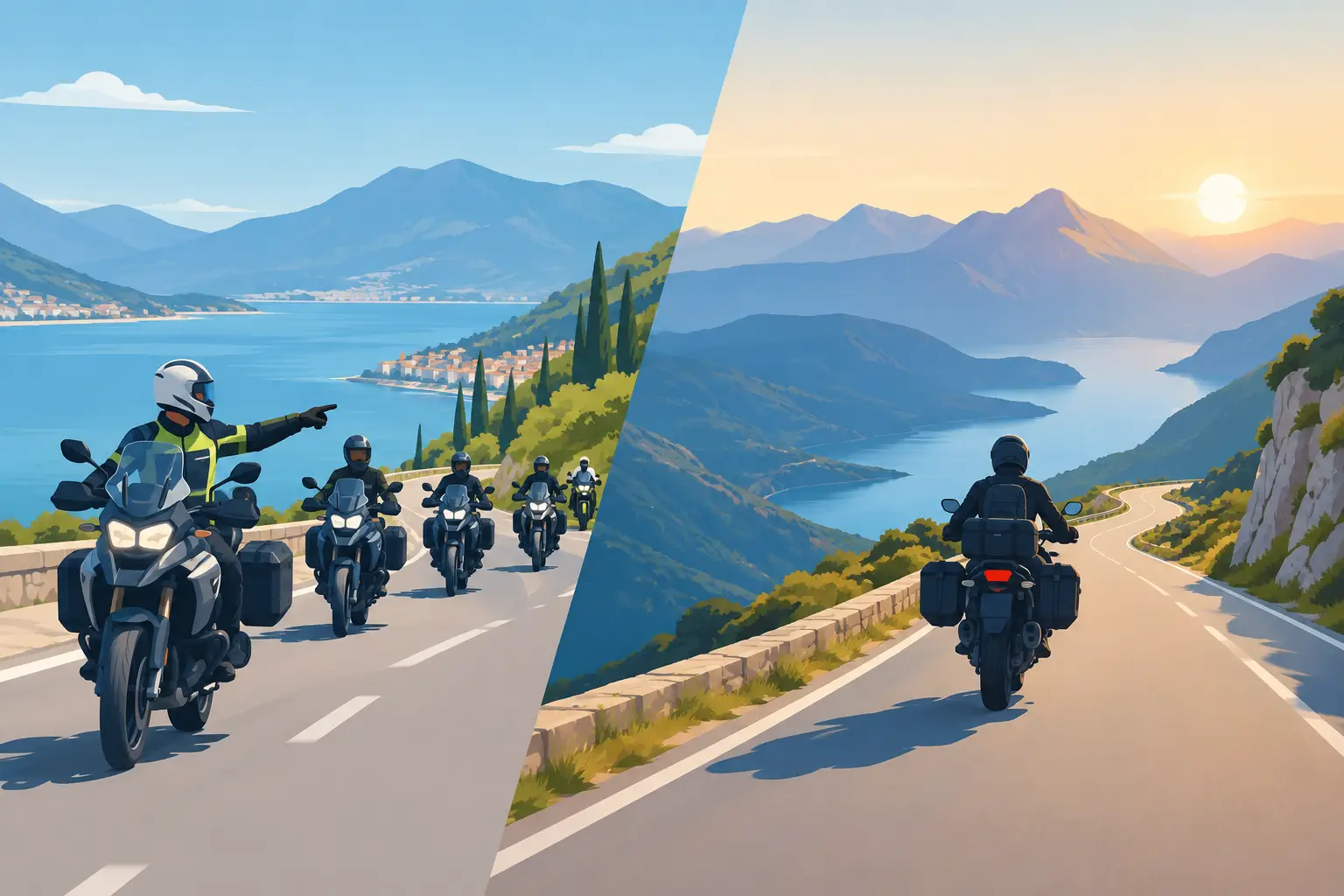
The best routes create a natural arc. You might leave an upscale lodge after breakfast, follow a lightly traveled byway through ranch country or a forested canyon, meet a local guide near a productive stretch of water, then continue to a distinctive overnight property after the rods are packed away. Luggage arrives separately. Dry clothes, refreshments, and personal items are waiting when you do.
That is the practical elegance of a supported motorcycle journey: your day remains active, but it does not become an exercise in managing equipment, reservations, and fatigue.
Fishing Gear Should Travel Protected, Not Improvised
A fly rod, reels, waders, boots, and a changing kit take up more space than many travelers expect. Even compact gear becomes cumbersome when it must be secured to a motorcycle, protected from road grit, and carried into a hotel each night.
A support vehicle changes the equation. Rods can travel in secure protective tubes, waders stay clean and dry until needed, and a full selection of layers is available when mountain weather turns cool. Guests can ride unencumbered and arrive at the river ready to fish rather than unpack.
For travelers bringing their own gear, the most useful approach is to discuss it during itinerary planning. A preferred rod weight, specific wading needs, or an interest in catch-and-release photography can shape the day. For those who would rather travel light, quality equipment and local guidance can be arranged in advance. The goal is not to make every guest look like a dedicated angler. It is to make the experience feel effortless from the first cast.
What a Well-Designed Day on the Water Looks Like
Private fishing access and expert local guidance add value well beyond convenience. A knowledgeable guide understands current water conditions, seasonal insect patterns, access etiquette, and where guests can find a more peaceful experience. That insight matters especially in popular destinations, where a beautiful river can feel very different depending on the stretch selected and the hour you arrive.
A thoughtfully arranged day also accounts for comfort. There should be time to change without balancing beside a roadside pullout, a well-prepared lunch or elevated picnic when appropriate, and a clear plan for returning to the motorcycles without feeling hurried. Anglers who want a full day on the water can do that. Guests who prefer a shorter introduction can fish for an afternoon and still enjoy an exceptional ride.
At Knowwhere Motorcycle Touring, these choices can be integrated into a fully private journey, with guided riding, concierge planning, premium accommodations, and support logistics coordinated around the guest rather than the other way around.
The Right Route Depends on Your Definition of Adventure
The American West is a natural setting for this combination, but compelling motorcycle fly fishing can be designed across the lower 48. The most rewarding itinerary is not always the one with the greatest number of famous stops. It may be a less-traveled road that follows a river valley, a lodge with a fire waiting after a cool evening on the water, or a local guide who knows a stretch of stream that feels removed from the world.
For a couple, that may mean alternating riding days with fishing and wellness experiences. For a group of friends, it may mean splitting the day between a guided float and a spirited afternoon ride. Families may prefer waters where beginners can learn together, with flexible activities for those who would rather explore the surrounding landscape. The itinerary should reflect the people traveling, not a pre-set idea of what an adventure is supposed to be.
The finest days often end quietly: a well-made drink on a terrace, boots drying by the door, and the river still present in conversation. Tomorrow’s road can wait until morning.