Your motorcycle may be perfectly suited to the roads you know, fitted to your posture, and packed with the small refinements that make a long day in the saddle feel effortless. That is why motorcycle shipping can be the most elegant way to begin a private touring escape. Rather than adding days of interstate travel before the real journey starts, you and your motorcycle can arrive prepared for the roads that deserve your full attention.
For riders planning a bespoke tour across the lower 48, shipping is not simply a transportation decision. It shapes the pace of the trip, the equipment you can bring, the time you preserve for exceptional lodging and experiences, and how confidently you can approach remote country. The right arrangement makes the logistics nearly invisible. The wrong one can create unnecessary uncertainty before the first morning’s ride.
Why Ship Your Own Motorcycle?
A premium rental motorcycle is often an excellent choice, particularly when convenience is the highest priority. Yet many experienced riders prefer the familiarity of their own machine. Your seat, suspension settings, windshield, communication system, luggage setup, and controls are already tailored to you. On a multi-day ride through mountain passes, desert distances, or changing weather, that familiarity has real value.
Shipping also protects the quality of your vacation time. A cross-country ride can be rewarding when it is the purpose of the trip. But if the objective is a carefully curated week of scenic roads, private guided riding, distinctive accommodations, and selected adventures, spending several extra days crossing highway miles may not be the best use of the calendar.
For couples and private groups, there is another advantage: arrival can be coordinated. Your motorcycles can be delivered near the tour starting point while you fly in rested and ready. Instead of managing a long approach ride, you begin where the scenery becomes compelling.
Choosing the Right Motorcycle Shipping Method
The essential choice is usually between open and enclosed transport. Open transport is often less expensive and can work well for short distances or for riders comfortable with normal road exposure. It is not necessarily careless, but the motorcycle will travel outside, subject to weather, dust, and the conditions of the road.
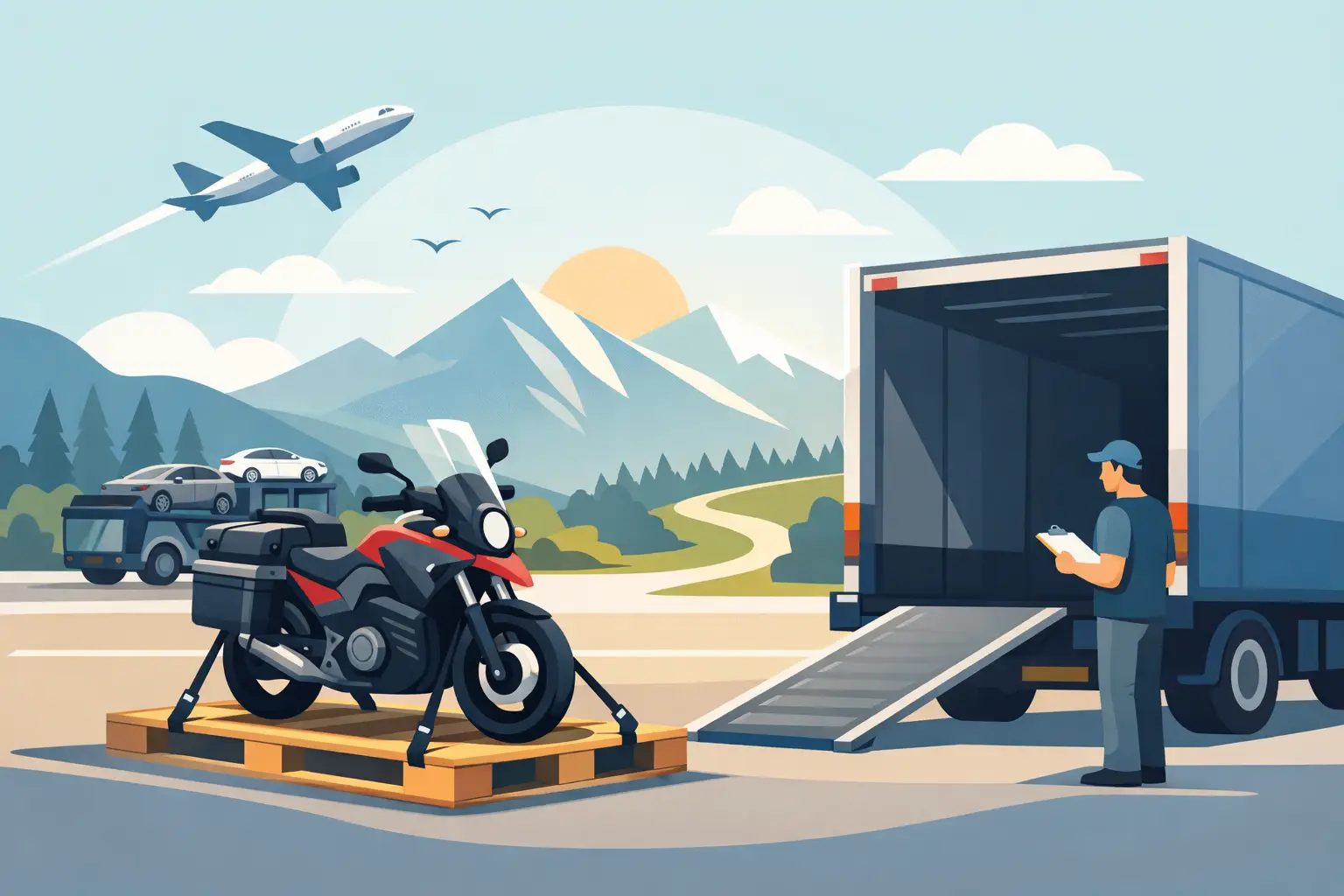
For luxury touring, enclosed transport is generally the more appropriate choice. A covered trailer offers meaningful protection from the elements and greater privacy for a high-value motorcycle. Look for a carrier that uses purpose-designed wheel chocks, soft tie-downs, and secure loading procedures rather than one that treats motorcycles as an afterthought in a general freight operation.
Shared transport is common and can be a sensible value when your schedule has flexibility. The carrier may collect and deliver multiple motorcycles along a route, which can affect the precise arrival window. Dedicated transport costs more but offers tighter control over timing and handling. It can be especially worthwhile for a private group, a rare or highly customized motorcycle, or a tour with fixed dates and limited room for delay.
The best option depends on the motorcycle, the route, the season, and your tolerance for schedule variation. A carrier’s lowest quote is rarely the full story. Ask what is included, whether pickup and delivery are truly door-to-door, how dates are communicated, and what happens if weather or routing changes the schedule.
Plan Motorcycle Shipping Around the Tour, Not Just the Flight
The most common planning error is treating delivery as a single guaranteed appointment rather than a window. Even respected carriers work around traffic, weather, vehicle inspections, road closures, and other pickups. For a high-touch itinerary, build a sensible buffer before the first riding day.
A practical target is to have the motorcycle arrive several days before the tour begins whenever possible. That window allows time for a careful inspection, a battery check, tire-pressure adjustment, and any final preparation. It also gives your host or receiving contact time to resolve a minor issue without compromising the itinerary.
Return shipping deserves equal attention. Confirm where the motorcycle will be released, whether the carrier can collect from the final hotel or a secure nearby facility, and how long you may need to retain keys or documents. If your final day includes a special dinner, a spa appointment, or a flight home, you should not be negotiating a rushed handoff in a parking lot.
At Knowwhere Motorcycle Touring, shipping coordination can be incorporated into the broader concierge plan, alongside route design, support-vehicle logistics, accommodations, and activity scheduling. The point is not to make shipping feel elaborate. It is to make it feel considered.
Preparing Your Motorcycle for Transport
Carriers have their own requirements, so always follow the specific instructions you receive. In most cases, the motorcycle should be clean enough for an accurate condition inspection and have no loose items attached. Remove or secure accessories that could shift in transit, including detachable luggage, helmets, cameras, and auxiliary bags.
Photograph the motorcycle from every angle before pickup. Include close images of existing marks, wheels, fairings, saddlebags, mirrors, and any distinctive accessories. A date-stamped walkaround video is also useful. This is not an expression of distrust. It is simply a disciplined record that makes condition verification straightforward at both ends.
Keep the fuel level low, typically no more than a quarter tank unless the carrier advises otherwise. Check for leaks, confirm the battery is secure, and make sure the motorcycle can roll, steer, and brake normally. If it has an alarm, explain how to disable it. Provide a working key, but do not leave personal documents, valuables, riding gear, or irreplaceable items in locked compartments.
Before the pickup driver departs, review the bill of lading carefully. It should document the motorcycle’s condition and identify existing cosmetic issues. Do the same inspection immediately at delivery, before signing a final receipt. If you see fresh damage, photograph it, note it on the paperwork, and contact the carrier’s claims representative while the evidence is clear.
Insurance, Coverage, and the Details Worth Asking
Do not assume that a carrier’s stated insurance coverage automatically protects the full value of your motorcycle. Ask for proof of cargo insurance and clarify the coverage limit per motorcycle, the deductible, exclusions, and claims process. Some policies limit recovery for accessories, custom paint, aftermarket components, or damage attributed to poor pre-existing condition.
It is also wise to speak with your personal motorcycle insurer before shipping. Your existing policy may provide some protection while the bike is in transit, or it may have limitations that need to be understood. For a collector motorcycle or a machine with extensive upgrades, written confirmation is preferable to assumptions.
Ask how motorcycles are secured, whether the carrier transfers bikes between trailers, and where they are stored if delivery is delayed. These questions reveal more than a polished website or a quick quote. A professional transporter should answer directly and comfortably.
Receiving Your Bike and Starting the Ride Well
Once your motorcycle arrives, resist the temptation to rush straight onto the road. Take a short local test ride, especially if the bike has traveled a long distance or has been stored overnight in different temperatures. Check tire pressures, lights, fluid levels, brakes, fasteners, and the operation of electronic accessories.
For a supported private tour, the arrival check can be paired with luggage planning. Keep daily essentials accessible while larger bags travel in the support vehicle. This allows you to ride with less weight and less distraction, while still having what you need when the weather turns or the route reaches higher elevations.
Shipping your motorcycle should preserve the parts of travel you value most: the sensation of the road, the changing landscape, and the freedom to stop when a view or a quiet town deserves more time. Give the logistics enough care before departure, and your first mile can feel like the beginning of the journey rather than the end of an errand.