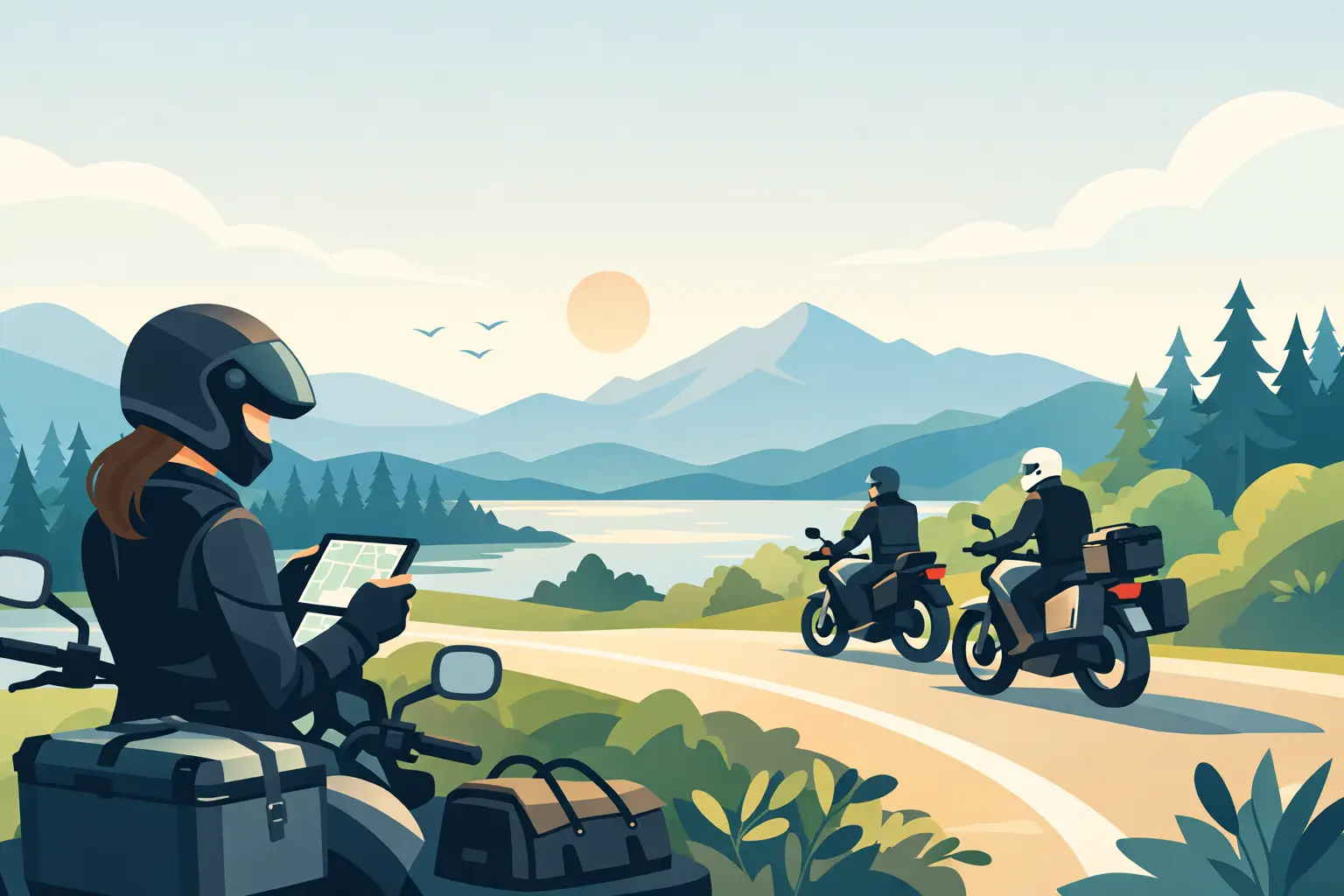
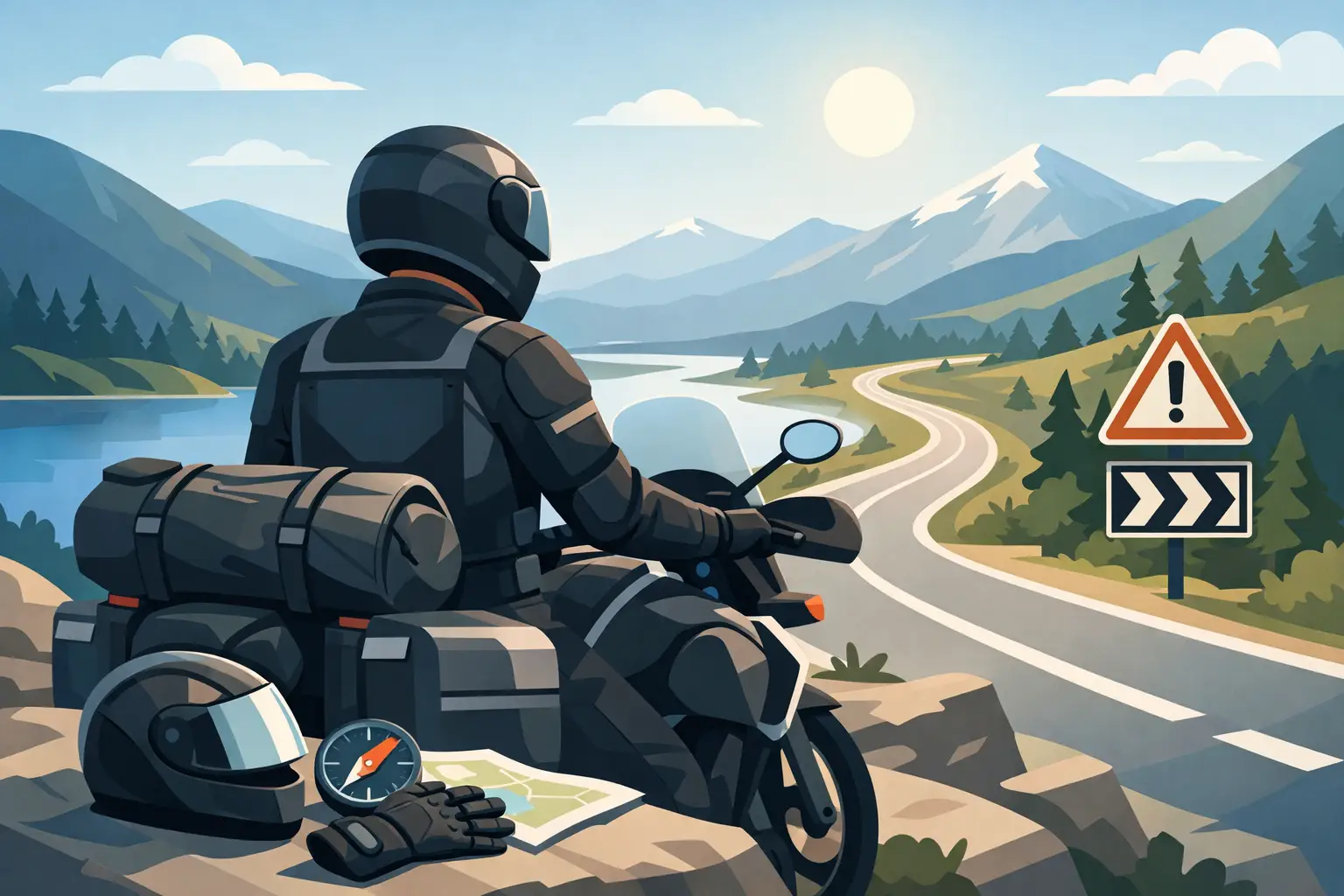
A remarkable ride through America’s most dramatic landscapes should leave you thinking about the view from the overlook, the perfectly timed lunch stop, and the road that seemed built for your motorcycle. Motorcycle tour safety is what makes that freedom possible. It is not a limitation on the experience. It is the thoughtful preparation, informed leadership, and quiet support that allow every mile to feel more relaxed, more personal, and more rewarding.
For a private, multi-day journey, safety begins long before the engines start. The condition of the motorcycles, the quality of the route, the pace of the group, and the plan for weather all shape the day ahead. The best touring experiences make these details feel effortless to the guest, but they are never accidental.
Motorcycle Tour Safety Starts With the Route
A beautiful road is not necessarily the right road for every rider, every motorcycle, or every day of a journey. A custom itinerary should account for more than distance and scenery. It must consider pavement quality, elevation changes, fuel availability, seasonal road conditions, traffic patterns, construction, and the time required to enjoy the landscape without rushing through it.
This is particularly relevant in the lower 48, where conditions can change remarkably within a single day. A morning may begin in desert heat, move into cool mountain air, and finish with an afternoon thunderstorm. A route that looks straightforward on a map can include long distances between services, sharp descents, loose gravel near roadwork, or wildlife crossings at dusk.
An experienced guide reads the route as a living environment rather than a line on a screen. That means choosing appropriate rest stops, adjusting the day when weather shifts, and knowing when an alternate road will deliver a better ride. It also means resisting the temptation to overfill the itinerary. A luxury motorcycle tour should have room for a scenic pullout, an unhurried meal, or a change in plans prompted by an exceptional local opportunity.
Start With a Motorcycle That Fits You
The most capable motorcycle is not always the largest or most powerful one. Proper fit has a direct effect on confidence, fatigue, and control, especially across several days of riding. Seat height, handlebar reach, weight, wind protection, braking feel, and luggage configuration should all suit the rider’s experience and physical comfort.
Before departure, take time to become familiar with an unfamiliar rental motorcycle. Understand the turn-signal controls, fuel range, cruise control, riding modes, traction settings, side stand, and luggage latches. A short orientation ride in a low-pressure setting can reveal whether the mirrors need adjustment, the windshield sits at the right height, or the seat requires a different setup.
For guests shipping their own motorcycles, a professional pre-tour inspection is equally worthwhile. Tires, brake pads, fluids, battery health, belt or chain condition, lights, and suspension settings deserve attention before a long itinerary begins. Small mechanical concerns are easier to resolve before they become a roadside interruption in a remote area.
A dedicated support vehicle brings another level of assurance. It can carry luggage, extra layers, hydration, tools, and supplies without asking riders to burden the motorcycle with more weight than necessary. It also provides practical backup if a mechanical issue, health concern, or sudden weather event changes the plan. That support is not about removing the adventure. It is about preserving it.
Dress for the Conditions You Will Actually Meet
Premium gear should feel comfortable enough to wear all day and protective enough to matter when conditions become unpredictable. A properly fitted helmet, abrasion-resistant jacket and pants, gloves, over-the-ankle boots, and eye protection form the foundation. Ventilation and waterproofing should reflect the destination and season, but versatility is usually more valuable than a single-purpose setup.
Layering is especially useful on extended tours. A light base layer manages changing temperatures, an insulating layer adds warmth at higher elevations, and a waterproof outer layer protects against rain and wind. Riders often underestimate wind chill on mountain passes and the fatigue created by being cold for hours. Conversely, desert heat calls for breathable protective gear, steady hydration, and planned breaks rather than the false comfort of riding underprepared.
High-visibility elements are worth considering, particularly in rain, low light, or congested areas. They need not compromise a refined touring look. A bright helmet detail, reflective trim, or a visibility vest used when conditions warrant can help other road users recognize you sooner.
Ride Within Your Day, Not Just Your Ability
A rider can be highly skilled and still make poor decisions when tired, dehydrated, distracted, or trying to keep up. On a multi-day trip, the goal is not to prove endurance. It is to arrive at each destination alert enough to enjoy the evening and ready for the next day’s ride.
A well-paced itinerary accounts for the cumulative effort of riding. Technical mountain roads, high winds, intense heat, city traffic, and long highway transfers all demand different levels of concentration. A private guide can tailor the pace to the group, create natural breaks, and separate the day’s riding from the pressure of watching a clock or searching for the next hotel.
Group riding requires its own discipline. Each rider should maintain a comfortable following distance, avoid fixating on the motorcycle ahead, and understand the plan for intersections, fuel stops, and regrouping. The right formation depends on road conditions and local regulations, but the principle remains constant: every rider needs space to see, react, and ride their own ride.
There is no prize for continuing through conditions that have turned unpleasant or unsafe. High crosswinds, lightning, thick smoke, hail, standing water, and severely reduced visibility justify a pause, a reroute, or a support-vehicle transfer. The most experienced travelers understand that flexibility is not a concession. It is good judgment.
Plan for Weather, Wildlife, and the Unexpected
Weather planning should be a daily ritual, not a glance at an app before breakfast. Conditions may be different on the far side of a mountain range or at the next elevation band. Check temperatures, wind advisories, precipitation timing, air-quality alerts, and road closures before leaving, then remain willing to revise the route as the day develops.
Wildlife deserves equal respect. Deer, elk, pronghorn, bison, and smaller animals can appear with little warning, particularly near dawn and dusk. Reducing speed in signed areas, scanning both road edges, and increasing following distance create more time to respond. If one animal crosses, expect another. Sudden swerving is often more dangerous than controlled braking and a deliberate line.
Remote riding also calls for dependable communication and a clear emergency plan. A guided private tour should establish how riders can contact the guide and support team, what to do if separated, where medical information is kept, and how changing conditions will be communicated. Cell service can be inconsistent in the places that make a motorcycle journey exceptional, so preparation matters.
The Quiet Value of Expert Support
The finest motorcycle travel feels spontaneous because its logistics have been handled with care. A guide who knows the region can recognize when a scenic road is best enjoyed early, where fuel should be taken before a remote stretch, and which stop offers a genuine respite rather than a rushed convenience. A concierge team can ensure that accommodations, dining, luggage, and optional activities fit the rhythm of the ride.
At Knowwhere Motorcycle Touring, that attention allows guests to focus on the pleasure of the road while trained professionals manage the moving parts around it. Private touring is especially valuable for couples, families, and friendship groups with different riding backgrounds, because the experience can be shaped around the people actually on the journey rather than a fixed group schedule.
The safest tour is not the one that eliminates every variable. It is the one that anticipates what can be anticipated, provides capable support for what cannot, and gives you the confidence to enjoy the road with presence. Choose the right pace, trust the conditions rather than the itinerary, and let every well-planned mile earn the memory waiting at the end of it.